
Our Services
Tailored driver training and fleet safety support to keep your team secure.
Driver Inductions
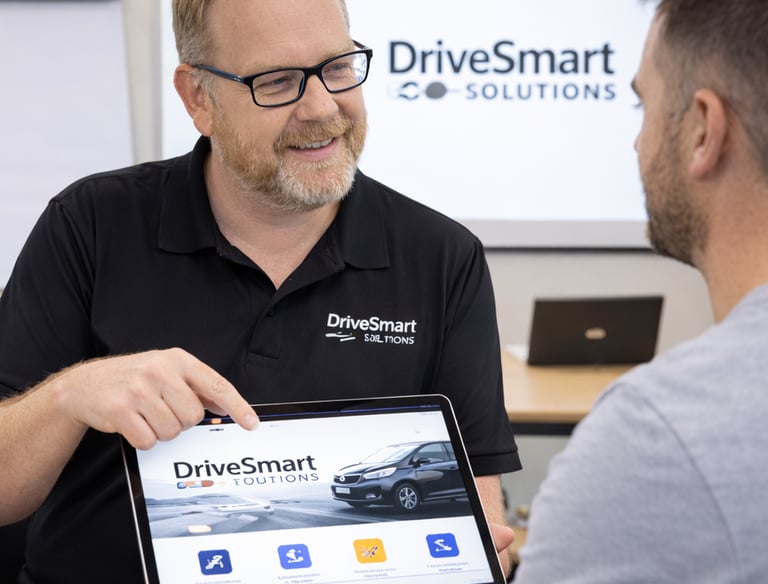
Comprehensive inductions ensuring drivers understand your fleet policies and safety standards.


On-Road Checks
Practical assessments highlighting safe driving habits and areas for improvement.
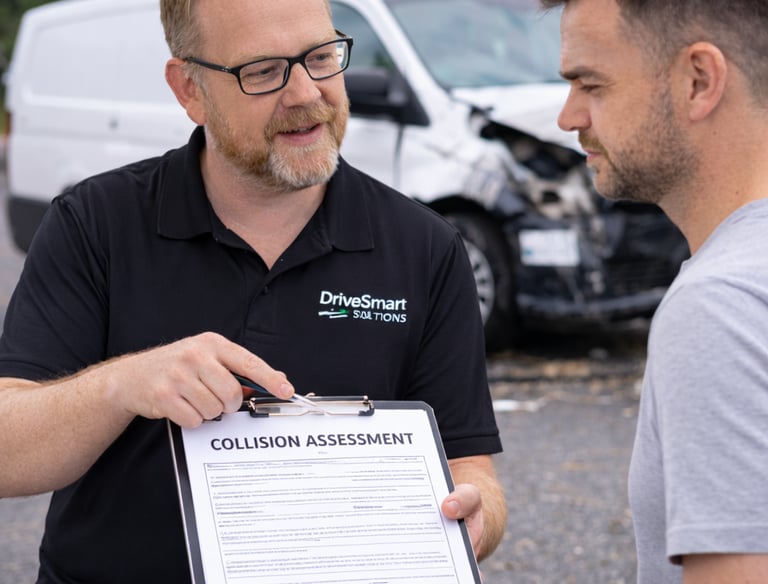
Post-incident training to help reduce risks and manage recovery effectively.
Collision Care
How we can help your fleet
Real results from tailored driver safety assessments
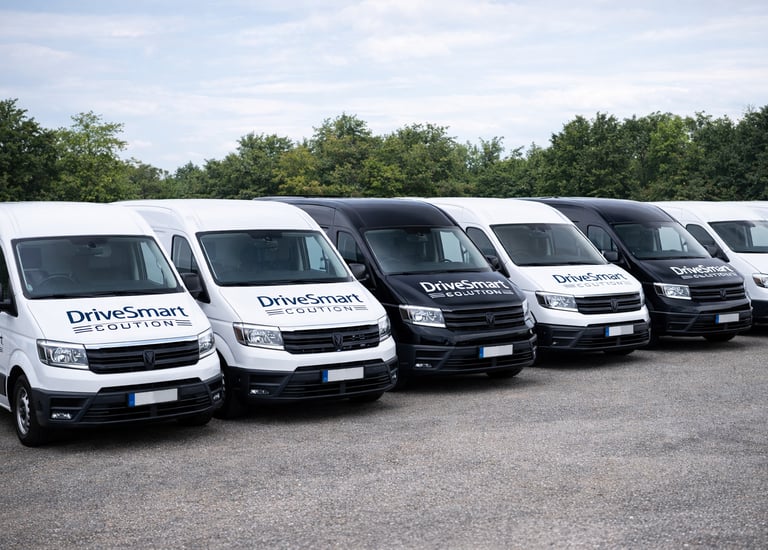
Driver Inductions
Driver Inductions – Step 1 of Our Fleet Safety Process
Driver inductions are the foundation of safe, compliant, and professional fleet driving.
At DriveSmart Solutions, inductions form Step 1 of our structured approach to improving driver standards and reducing risk across your fleet. Every induction is delivered through a detailed, personalised presentation, tailored to your vehicles, operating environment, and internal policies.
What Our Driver Inductions Cover
Each induction ensures drivers clearly understand their responsibilities and your expectations, including:
Driving law & legal responsibilities
Current road traffic law, employer and driver responsibilities, and duty of care.Driver safety & fitness to drive
Fatigue management, medication, wellbeing, eyesight, and decision-making.Seat belt use & legal requirements
Legal obligations for drivers and passengers in all seating positions.Distractions & driver behaviour
Mobile phones, in-cab technology, cognitive distraction, and professional conduct.Speed limits & vehicle-specific rules
Speed limits relevant to different vehicle types within your fleet.Vehicle checks & defect reporting
Daily walk-around checks, defect identification, and reporting procedures.Slow-speed manoeuvring
Reversing, parking, site access, vulnerable road users, and vehicle positioning.Vehicle technology & driver aids
Safe and correct use of telematics, cameras, sensors, and in-vehicle systems without creating distraction.Collision reporting & aftercare procedures
What to do in the event of an incident, immediate actions, reporting requirements, and post-collision responsibilities.Company-specific policies & standards
Any additional rules, procedures, or expectations unique to your organisation.
Our Structured Approach
Step 1 – Driver Induction
Establishes clear expectations, legal understanding, and safe working practices from day one.Step 2 – Driver Assessment
Evaluates real-world driving standards and identifies risk areas.Step 3 – Targeted Training & Aftercare
Supports continuous improvement following incidents or assessments.
This structured approach ensures every driver starts informed, confident, and accountable—helping protect your people, your vehicles, and your organisation.
On Road Assessment
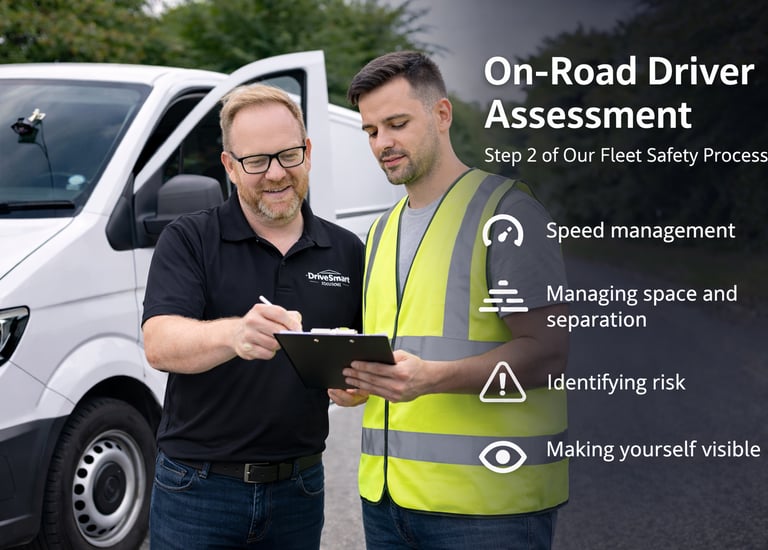
On-Road Driver Assessments – Step 2 of Our DVSA-Aligned Safety Process
On-road driver assessments form Step 2 of our structured fleet safety process and are delivered in line with DVSA best practice and Roadcraft principles. These assessments focus on how drivers apply safe, legal, and professional driving behaviours in real-world conditions, rather than test-style performance.
Each assessment is conducted in the driver’s normal working environment and provides fleet managers with a clear, objective assessment of risk, competence, and decision-making, supporting duty of care and ongoing risk reduction.
DVSA-Aligned Assessment Focus Areas
Speed Management
(Roadcraft: Information & Control)
Driving at the right speed for the situation
Selecting safe and appropriate speeds for road, traffic, and weather conditions
Reducing speed early and progressively when approaching junctions and hazards
Demonstrating safe decision-making when entering higher-risk areas
Applying correct stopping distances to maintain control and reaction time
Managing Space
(Roadcraft: Position & Space)
Creating time and safety margins
Maintaining safe lateral distance from parked vehicles
Using road position to manage space and reduce exposure to risk
Planning ahead to minimise the need for reversing while on the road
Maintaining safe following distances to allow time to react
Identifying Risk
(Roadcraft: Anticipation & Planning)
Seeing hazards early and responding safely
Controlled and safe slow-speed manoeuvring
Awareness of the risks associated with stopping on the road
Identifying developing hazards early
Adjusting driving plans to prevent risk escalating into incidents
👀 Making Yourself Visible
(Roadcraft: Information Phase)
Clear communication with others
Correct, timely, and consistent use of mirrors
Appropriate signalling to inform other road users
Responding safely to the actions and behaviour of others
Actively protecting vulnerable road users, including pedestrians, cyclists, and motorcyclists
Why DVSA-Aligned Assessments Matter
DVSA-aligned on-road assessments help fleet managers to:
Demonstrate proactive duty of care
Identify and manage risk before collisions occur
Maintain consistent, defensible driving standards
Support driver development with evidence-based feedback
Reduce collisions, downtime, and associated costs
Each assessment provides meaningful insight into driver behaviour and supports targeted training rather than generic intervention.
This is all carried out in one of your company vans. This helps us see the drivers ability in the vans they will be working in.
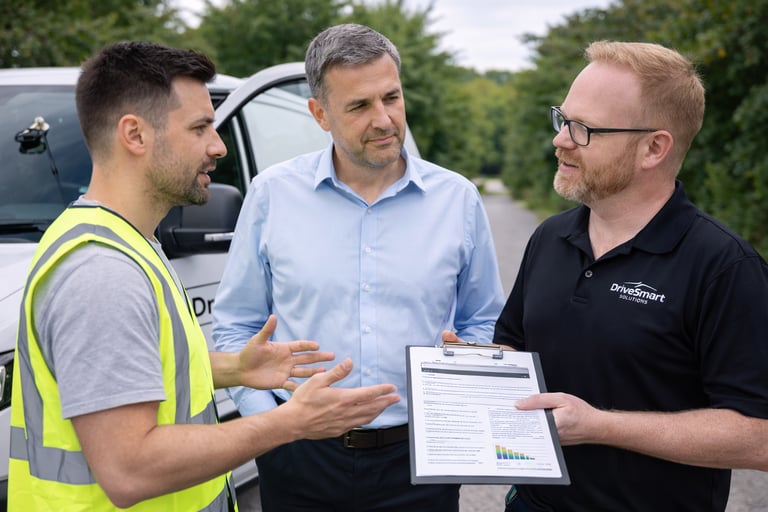
Targeted Training & Aftercare – Step 3 of Our ISO-Aligned Fleet Safety Process
Targeted Training & Aftercare forms Step 3 of our structured fleet safety process and is delivered in line with ISO 9001 and ISO 45001 principles, ensuring continual improvement, documented evidence, and effective risk control.
This stage focuses on closing the loop following assessment by converting findings into measurable actions, supporting driver development, and providing fleet managers with clear records to demonstrate due diligence and duty of care.
What Step 3 Includes
Documented Assessment Reporting
(ISO 9001: Documented Information)
A detailed written assessment report issued for management review
Suitable for inclusion within driver files and audit records
Clear identification of strengths, risk areas, and recommendations
Supports traceability, consistency, and quality assurance
On-Site Review & Management Feedback
(ISO 45001: Worker Participation)
Structured feedback session with the driver
Optional on-site or remote review with the fleet manager
Clear explanation of outcomes, findings, and agreed next steps
Encourages engagement, understanding, and ownership
Targeted Training Interventions
(ISO 45001: Risk Control)
Training focused specifically on identified risk behaviours
Proportionate and relevant, avoiding generic or unnecessary training
Aimed at reducing likelihood and severity of future incidents
🔁 Follow-On Aftercare & Continuous Improvement
(ISO: Continual Improvement)
Ongoing aftercare support where required
Post-incident coaching, refresher training, or re-assessment
Supports sustained behavioural change and long-term risk reduction
Measurable Outcomes & Fleet KPIs
This structured approach supports measurable improvements against key fleet KPIs, including:
Reduction in collision frequency and severity
Decrease in vehicle damage and downtime
Improved compliance and audit readiness
Consistent driving standards across the fleet
Demonstrable management of driver risk
By linking assessment outcomes to targeted actions and documented follow-up, fleet managers can clearly evidence continuous improvement and proactive safety management.
Our ISO-Aligned Fleet Safety Framework
Step 1 – Driver Induction
Establishes legal, behavioural, and company standards.Step 2 – On-Road Driver Assessment
Identifies real-world risk using DVSA and Roadcraft principles.Step 3 – Targeted Training & Aftercare
Delivers documented improvement, measurable outcomes, and ongoing support.
Targeted Training & Aftercare

Drivesmart Solutions helped us reduce incidents by improving driver awareness significantly.
J. Smith


Their on-road assessments gave our fleet managers clear insights to enhance safety.
M. Lee


★★★★★
★★★★★
Contact
Email - rhys@drivesmart.solutions
© 2026 DriveSmart Solutions. All rights reserved. Made with recycled pixels
Phone - +44(0) 7591 911 540
Kent based assessor / trainer


In partnership with


On behalf of